
One platform. Six modules. One risk rating
Continuously assess your organisation and every company you
depend on from the outside without agents, questionnaires or
system access.
 First rating free
- Assessed by domain
- Nothing to install
Used by teams responsible for security and risk




One number. Every finding behind it
The company-level score gives leadership a clear view of risk, while security teams can drill
into the evidence, severity and remediation behind every point.

Company
We start with your company domain, digital assets, and key information.
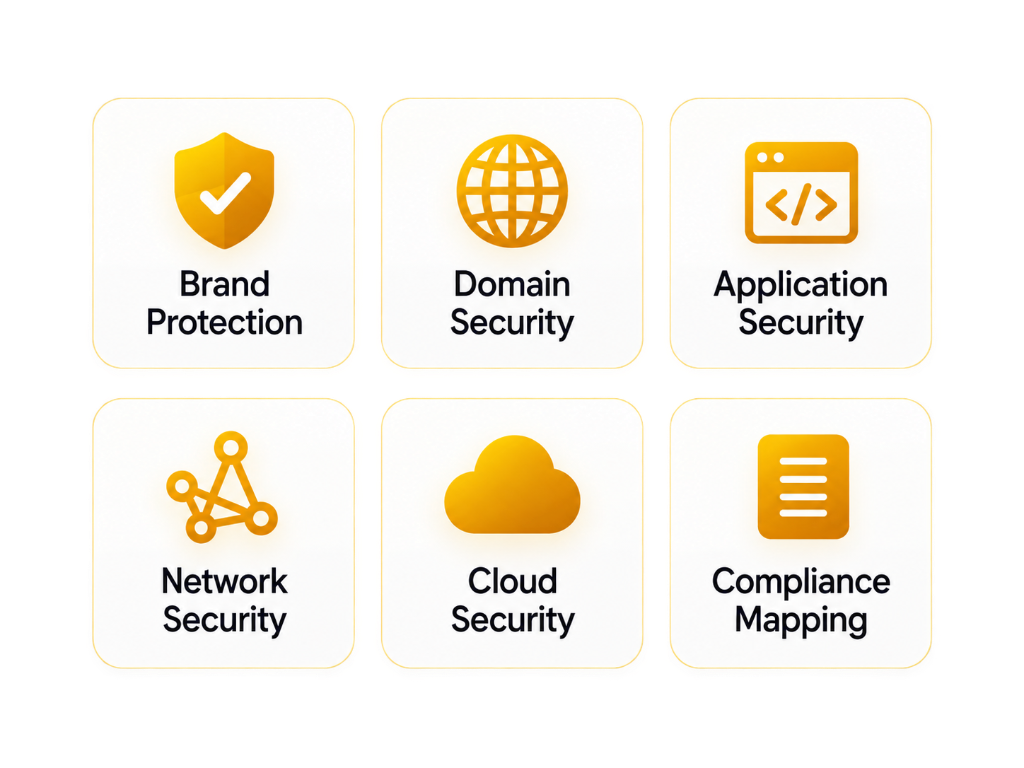
Six Modules
We scan across six critical areas of your digital presence and security posture.
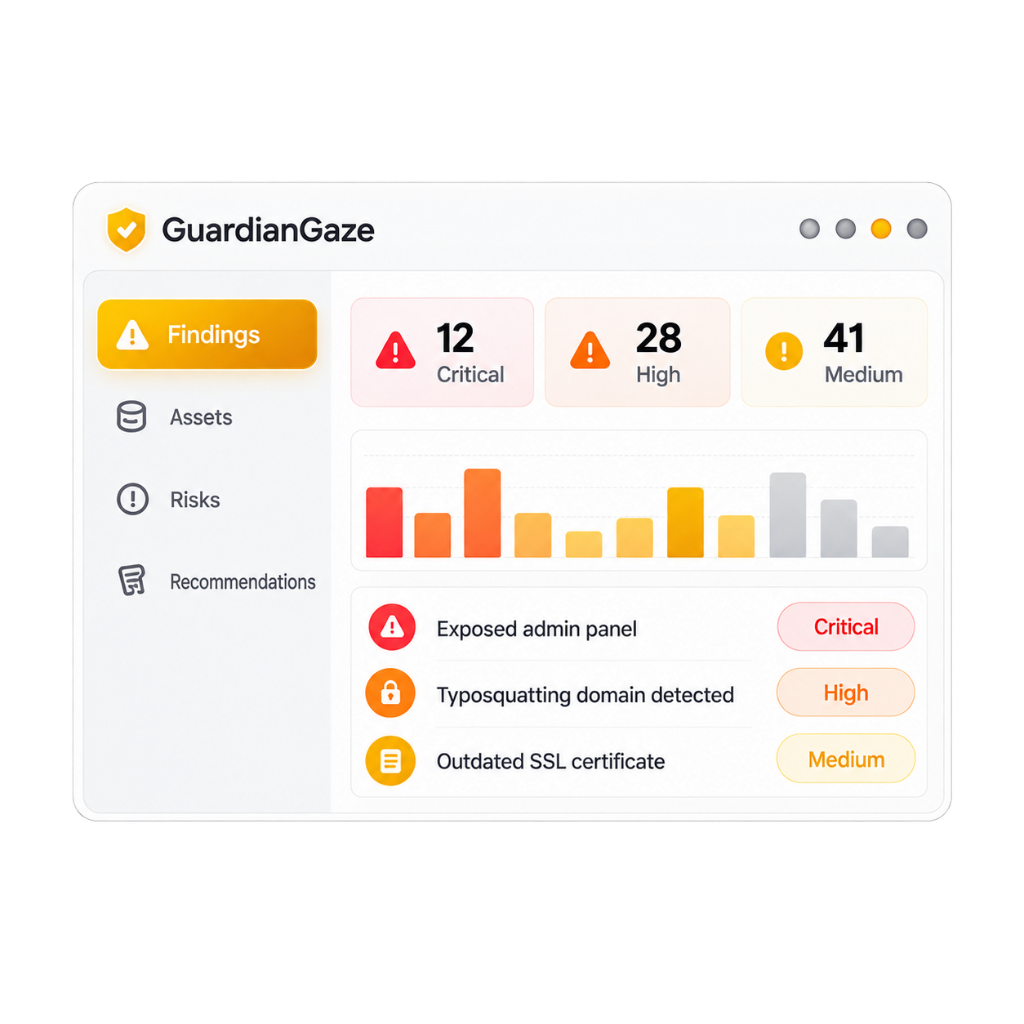
Findings
We deliver clear, prioritized findings with evidence and actionable insights.
0–100 Rating
Get a single, easy to understand security rating that show your overall risk posture.
Everything exposed to the public internet, assessed together
Your company is only part of the picture
Rate your own organisation, vendors, subsidiaries and acquisition targets
using the same methodology.
Company
Every finding tells you what to do next
High DMARC policy not enforced
- Evidence
- Severity
- Remediation
- SLA
- MITRE ATT&CK
- Compliance mapping
A rating that changes when your exposure changes
GuardianGaze continuously reassesses the external posture rather than
treating security as an annual snapshot.
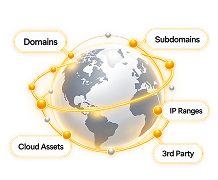
Discover
Find and catalog your external attack surface across the open
internet.
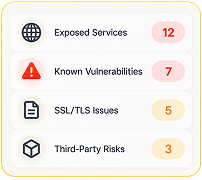
Assess
Analyze findings for real risks, misconfigurations and exposed
assets.
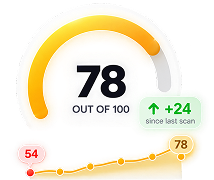
Score
Get a dynamic security rating that
reflects your current exposure.
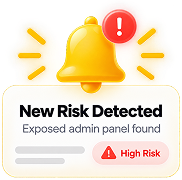
Alert
Get notified when your exposure
changes for better or worse.
Reassess
We continuously scan, reassess and
update your rating as things change.
One dataset. Different conversations
Executive Report
For leadership and boards
Technical Report
For security operations
Compliance Report
For audit and governance
Customer Story
“Our vendor review used to be a quarterly spreadsheet.
Now it’s a dashboard we check weekly. When a critical
supplier’s score dropped, we called them about it
before their own team had noticed.”
CISO · Mid-market financial services group
Common questions
Start with a company you already know
Rate your own organisation first and verify exactly
what GuardianGaze sees.